

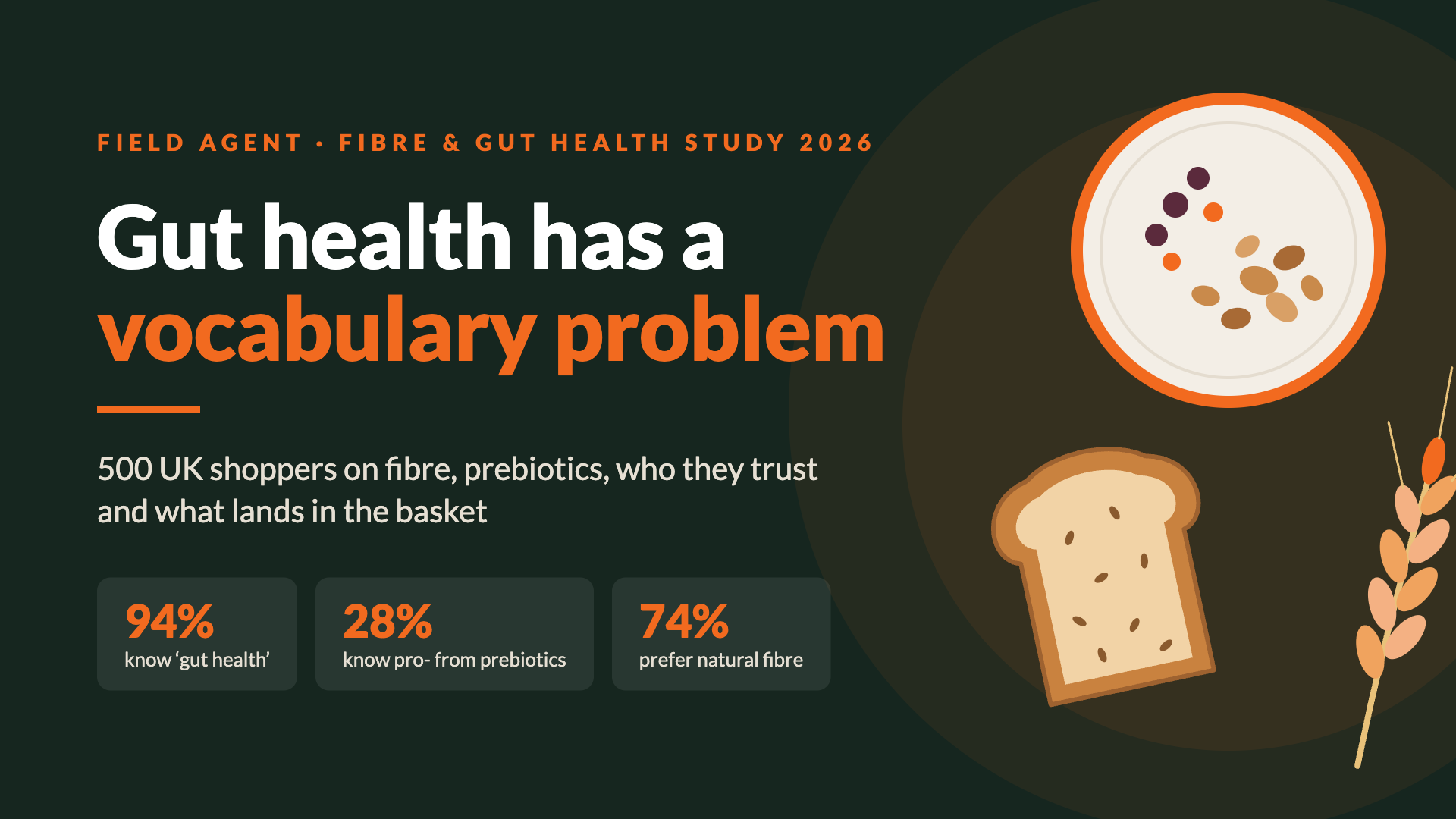
Gut health has a vocabulary problem: what 500 UK shoppers told us about fibre & gut health
Fibre is having a moment. Eight in ten of the shoppers we surveyed have noticed it becoming more prominent in food and drink marketing, and a quarter call it “a huge buzzword – it’s everywhere”.
But noticing a message isn’t the same as understanding it. Between 24 September and 1 October we asked 500 UK grocery shoppers, through the Field Agent app, what they actually know about fibre and gut health, who they trust on it, and whether it’s changing what goes in their basket.
The short version: awareness is high, understanding is shallow, and shoppers have clear views on where they want their fibre to come from.
1. The language is ahead of the learning
94% are familiar with the term ‘gut health’, and 61% describe fibre in terms of digestion or gut health. The basics have landed.
The detail hasn’t. 55% couldn’t say what prebiotics are, and only 28% feel confident they know the difference between probiotics and prebiotics. A third (34%) weren’t confident at all, or didn’t know there was a difference.
Asked to explain prebiotics, one shopper wrote: “Ooh, I am not sure! Pre meaning before something but this isn’t a phrase I have heard of.”
The same gap shows up on pack. Only 10% say they fully understand what a fibre or gut health claim means for their health; 69% understand it “roughly”. And 69% don’t know how much fibre an adult should eat in a day. Of the 31% who think they do, around half give the right answer of 30g. That’s just 16% of everyone we asked.
2. Packs reach. Professionals convince.
On-pack messaging is where most shoppers meet the fibre story: 71% have seen it there, ahead of TV advertising (61%) and social media (54%).
Reach and trust are different things, though. Asked which single source they trust most, 57% chose a doctor, dietitian or pharmacist, yet only 27% have actually heard about fibre or gut health from one. On-pack messaging is the second most trusted source, at 21%. Social media influencers are trusted most by just 2%.
The encouraging part: only 3% say they don’t trust fibre and gut health claims at all. Shoppers aren’t sceptical so much as unsure. That’s a job for clearer explanation, not defence.
3. Natural beats fortified
When the claim is identical, 74% would choose a product that’s naturally high in fibre over one with fibre added. Just 5% would pick the added-fibre option.
Processing is the watch-out. 65% have at least some concern about getting fibre or gut health benefits from ultra-processed foods with added ingredients. One shopper described “checking ingredients before I buy things to make sure I get the one with less stuff added to it”.
4. Dairy owns the gut health purchase
Asked about the last thing they bought for its fibre or gut health benefit, 42% named yoghurt or kefir. Cereal, granola and oats came second at 23%. Bread, bars and snacks together made up just 14%, even though they’re everyday sources of fibre.
That matters more because those categories are losing ground. 38% say they’re eating less bread than a year ago (only 9% are eating more), and 50% have cut back on snacks and sweets. Meanwhile, half are eating more fruit (51%) and more vegetables (51%).
5. Awareness isn’t the barrier. Routine is.
Shoppers know which foods are linked to gut health. They just don’t eat them much. Kefir is linked to gut health by 68% but eaten regularly by only 21%. For kimchi and sauerkraut it’s 49% versus 15%.
The reverse is true of everyday staples. Garlic and onions (66%) and bananas (65%) are the most regularly eaten of the foods we asked about, yet only 16% and 29% connect them with gut health.
6. Fibre is holding its own against protein
Protein has led ‘better for you’ marketing for years, so we asked shoppers how the two trends compare. 45% find them equally appealing, 26% find fibre more appealing and 15% find it less appealing.
The reasons are telling. Protein is often read as a gym trend; fibre reads as everyday health. As one shopper put it: “I think protein is linked to being muscular and going to the gym where as gut health is about keeping a healthy body.”
And it’s already changing baskets
57% have changed their shopping or eating habits in the last year to get more fibre or support their gut health, and 14% have changed them significantly. Among those who changed, the most common moves were eating more fibre (33%), buying more probiotics or live yoghurt (26%) and eating more fruit and veg (24%).
What this means for brands and retailers
- Explain, don’t assume. Shoppers know the words but not the meaning. Plain-English explanation of what a benefit does is likely to work harder than another claim.
- Borrow expert authority. 57% trust health professionals most. Professional endorsement and clear sourcing could help a claim go further.
- Lead with the whole food. Put the naturally fibre-rich ingredient up front, not the fortification.
- Give shoppers a number. With 69% unaware of the 30g daily target, “30g a day – this pack gives you Xg” turns a vague claim into a measurable one.
- Close the fermented gap. Kefir and kimchi don’t need more awareness. They need trial, taste and a place in the weekly routine.
- Claim fibre beyond the chiller. Bread, cereal and snacks already carry fibre, but shoppers aren’t buying them for it. With bread consumption falling, that story needs telling.
Any on-pack wording still needs to sit within the UK rules on nutrition and health claims.
What’s working in store?
To find out what products are attracting shoppers & communicating key messages most effectively we're planning to launch an in store shopper insights study. If you'd like to take part please contact robin@fieldagent.co.uk.
About the study
500 UK grocery shoppers who had bought food or drink in the last month, surveyed through the Field Agent app from 24 September to 1 October 2026. 34 questions, with open-ended answers coded into themes.
Field Agent runs fast shopper research with a panel of 200,000+ UK shoppers. If you’d like the full report, including shopper verbatims drop an email to robin@fieldagent.co.uk.
- << Previous Post
- Next Post >>